
Why snug, and why not tight
The palm does the work. When it lies flat against the hand, the glove closes with the fingers and the hitter feels the handle through it, and grip pressure stays the same from swing to swing. Loose leather folds ahead of the fingers, slides on the handle, and makes the hitter squeeze harder to hold on, which tightens the forearms and slows the hands. So the palm wants to be snug.
Tight is different. A glove that has to stretch to let the hand make a fist is working against the hand on every grip, and the leather that does give with wear gives across the palm, not in the length of the fingers. The batting glove fit guide goes through each part of the fit in turn; the signs below are the short version.
Signs it is too tight
- Fingertips pressing the ends of the glove.
- The seam between the fingers pulling when the hand is open.
- The leather tight across the knuckles when you make a fist.
- The strap fastened at its loosest and still short.
Any of these means size up. Between two sizes, a hand that is long in the fingers takes the larger size with the strap firm.
Signs it is too loose
- Empty leather at the fingertips that folds when you grip.
- A ridge of leather across the palm with a bat in your hands.
- The glove turning on the hand when you waggle the bat.
- The strap fastened at its tightest to hold the glove still.
Any of these means size down, or try a pair with a different cut. Between two sizes, most hitters are better served by the smaller one, because the palm gives a little across its width with wear and a loose palm never tightens.
How tight the wrist strap should be
Firm enough that the glove does not shift when the bat is waggled, loose enough that the wrist still hinges freely through the swing. The strap holds the glove to the hand; it is not a brace, and a strap cranked to its limit is usually covering for a glove that is the wrong size in the body. Bass batting gloves are recorded with one of two straps, the Max Pro or the Low-Pro; each product page says which its pair carries.
Sizing a Bass pair
Bass batting gloves are listed in adult S, M, L and XL, and some pairs add a youth XL or a youth L; the size list on each product page is the current one. To choose between letters, measure the hand from the crease at the base of the palm to the tip of the middle finger and around the knuckles with the thumb excluded, then use the signs above on the first fitting. The palm materials are recorded for each pair: Cabretta leather on the Ambush, Cotton Candy and Gold Series Powder Blue, Pittard leather on the Platinum Series, premium leather on the Hawk pairs.
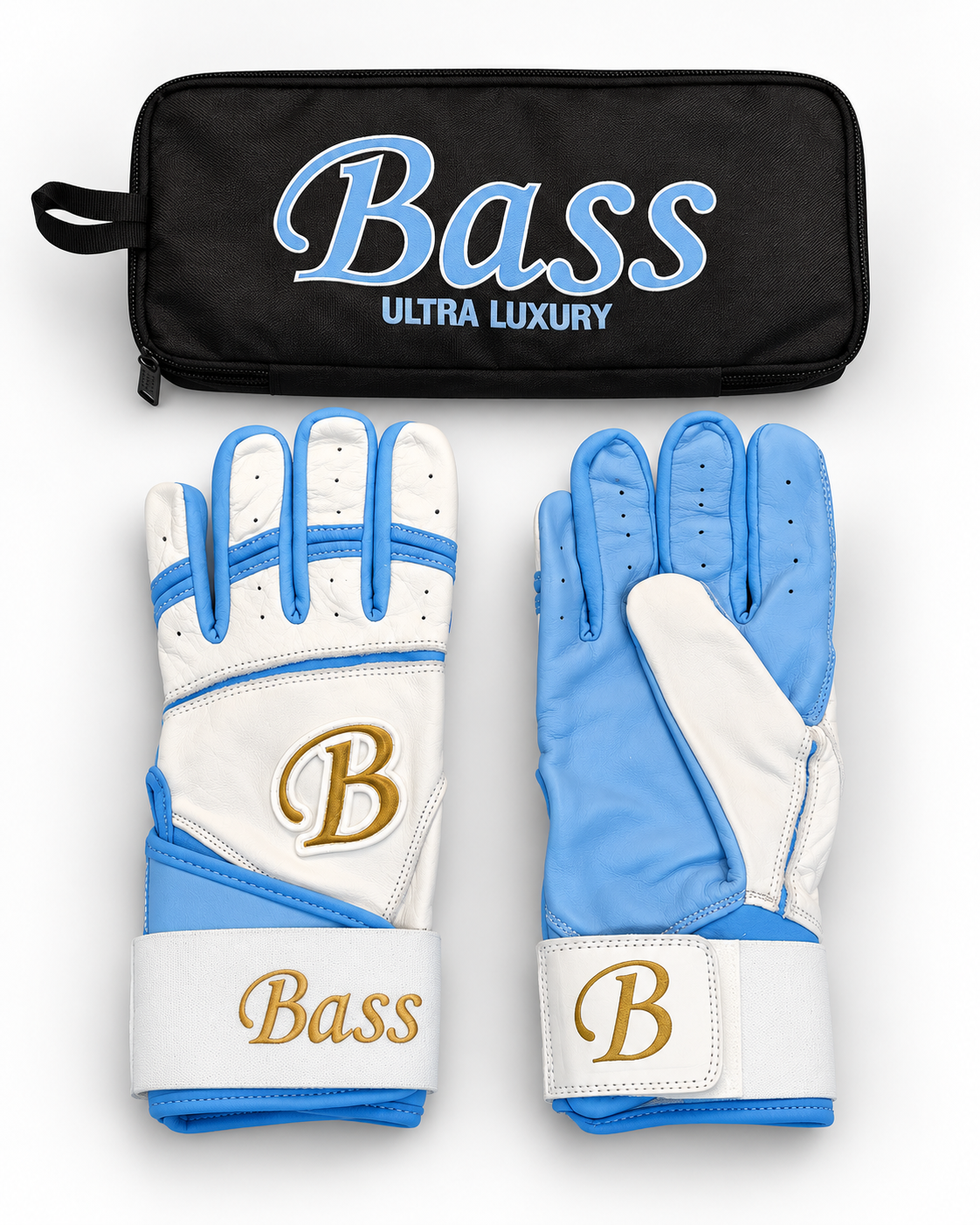
Bass Gold Series: Powder Blue Batting Gloves
View Piece →
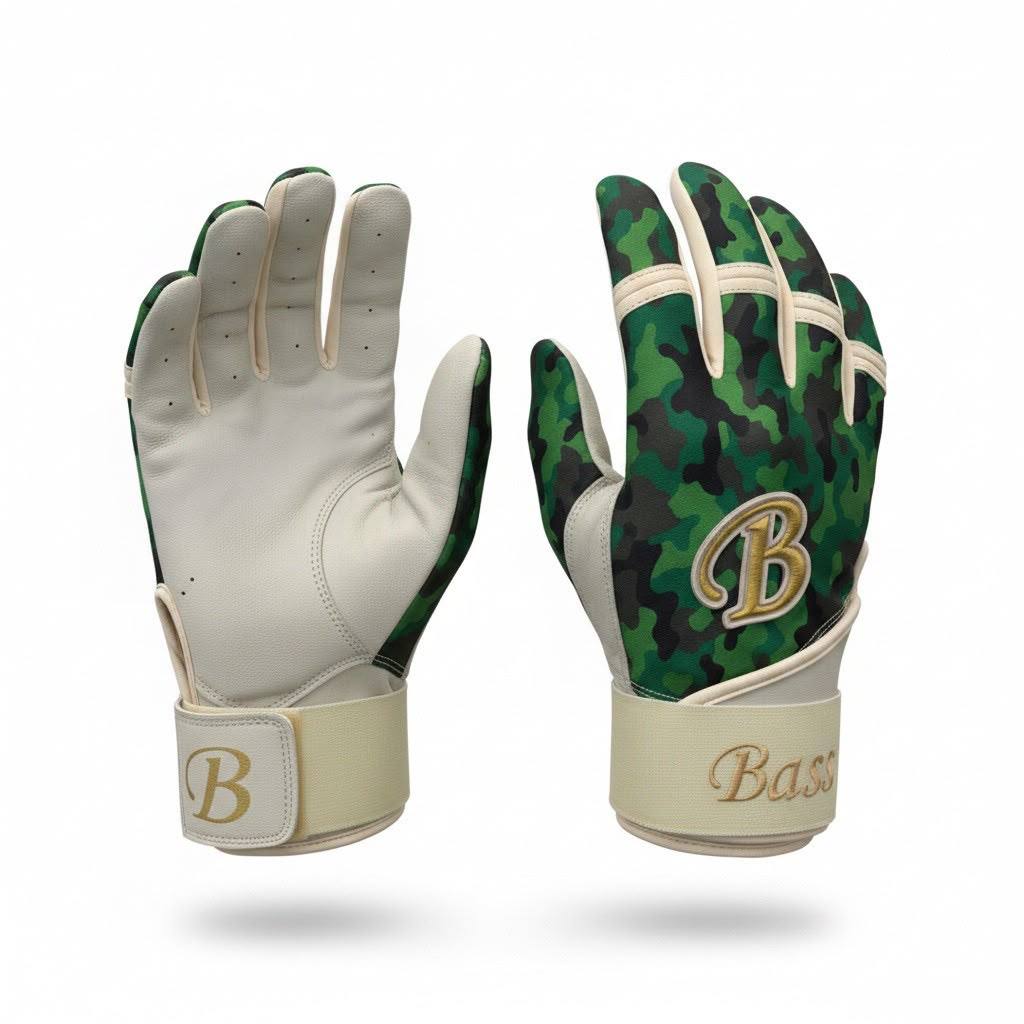
Bass - Ambush Batting Gloves
View Piece →
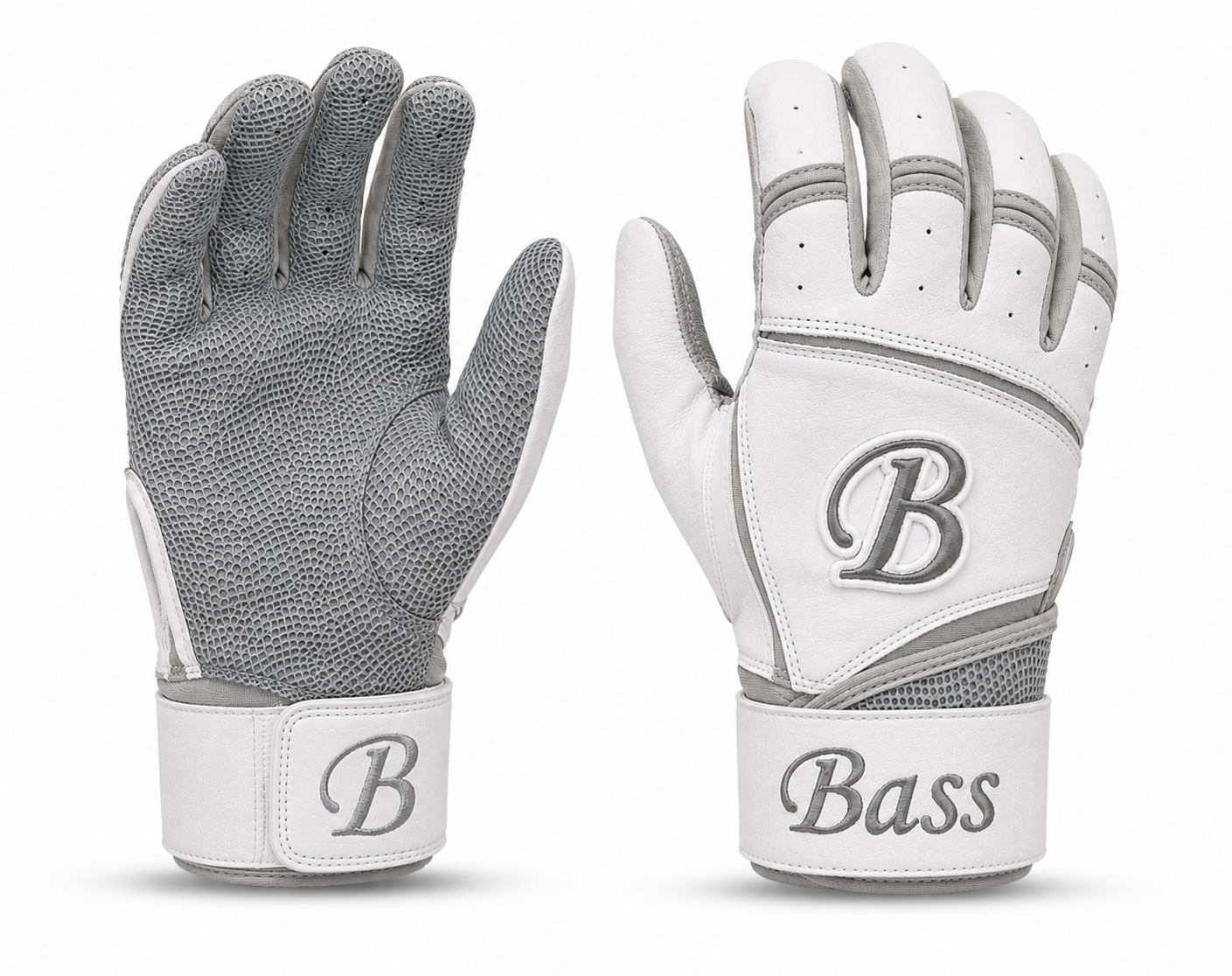
Bass Platinum Series
View Piece →
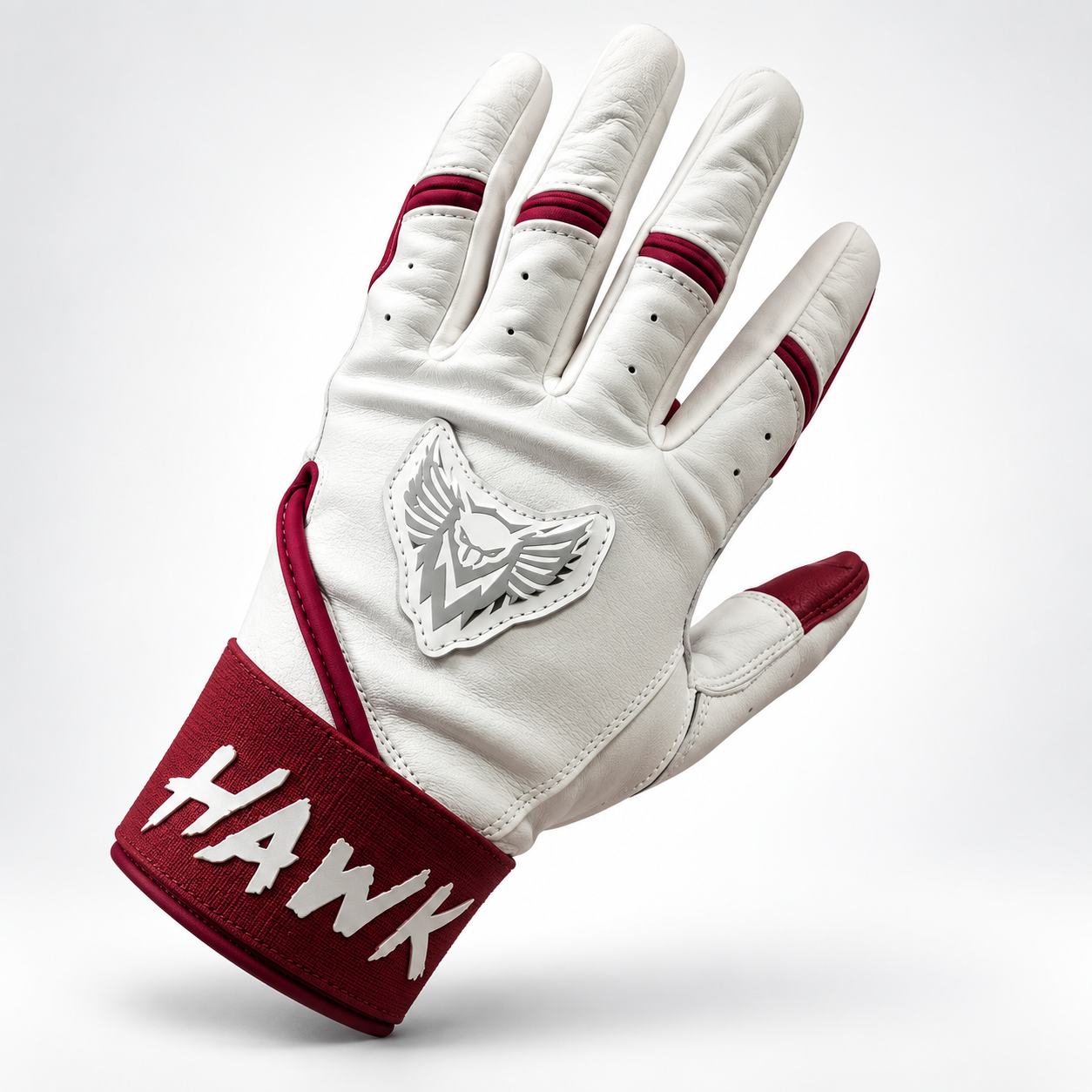
Hawk Series: Maroon Platinum
View Piece →
Bass and Hawk batting gloves on BassGloves.com, with their listed sizes on each page.
A pair that fits lasts longer too: a glove that folds wears through at the fold. Washing, where a pair has care recorded, is on the Product Care page.
Questions
- Should batting gloves be tight or loose?
- Neither. Snug: the palm flat with no spare leather, fingertips at the ends without pressing, the strap firm and the wrist free.
- Do batting gloves loosen up?
- A little across the width of the palm with wear. They do not get longer in the fingers, so buy the finger length that is right on the first day.
- Should I size up or down in batting gloves?
- Between sizes, down for most hands, because a loose palm never tightens. Up for a hand that is long in the fingers, with the strap firm.
- Why do my batting gloves bunch in the palm?
- The glove is a size too big, or its cut is wider than your hand. A ridge of leather under the grip slides and wears first. Size down or try a different cut.