
What the number measures
Glove size is length: from the bottom edge of the heel to the tip of the index finger, following the curve of the palm. An 11.75 inch glove is a quarter inch longer along that line than an 11.5. The number says nothing about pocket depth, the width of the hand opening, the web, or the stiffness of the leather, and any of those can matter more than the quarter inch. The fielding glove sizing guide covers how the measurement works and the common sizes by position.
Who commonly plays which
- 11.5 inch
- The common middle-infield size: second base and shortstop, where the transfer has to be quick and the pocket shallow enough to find the ball at once.
- 11.75 inch
- Common for shortstops who want a little more pocket, and for third basemen, who take harder contact and value a little more glove in front of the ball.
- Either
- Pitchers often sit in this range as well, usually with a closed web to hide the grip.
Common practice across the game, not a rule and not a Bass specification. Plenty of shortstops play 11.5 and plenty of second basemen play 11.75.
What the quarter inch actually changes
- Pocket. On the same pattern, the longer glove usually carries a slightly deeper pocket. Deeper holds a hard-hit ball better; shallower lets the throwing hand find it faster.
- Closing speed. A little more leather takes a little longer to close and to open. On a double play that beat is the difference the middle infielder notices.
- Reach. A quarter inch of reach is not the reason to choose either; it is not enough to turn a miss into a catch.
- Fit. The hand opening and finger stalls are decided by the pattern, not the length, so an 11.75 from one maker can fit a hand more closely than an 11.5 from another.
Fastpitch and youth
Fastpitch gloves generally run half an inch to an inch larger at each position because the ball is bigger, so a fastpitch middle infielder often plays what a baseball third baseman plays. A youth glove is shorter and shallower with a narrower opening, and a young player who cannot close an 11.5 is not helped by an 11.75.
The Bass gloves, as listed
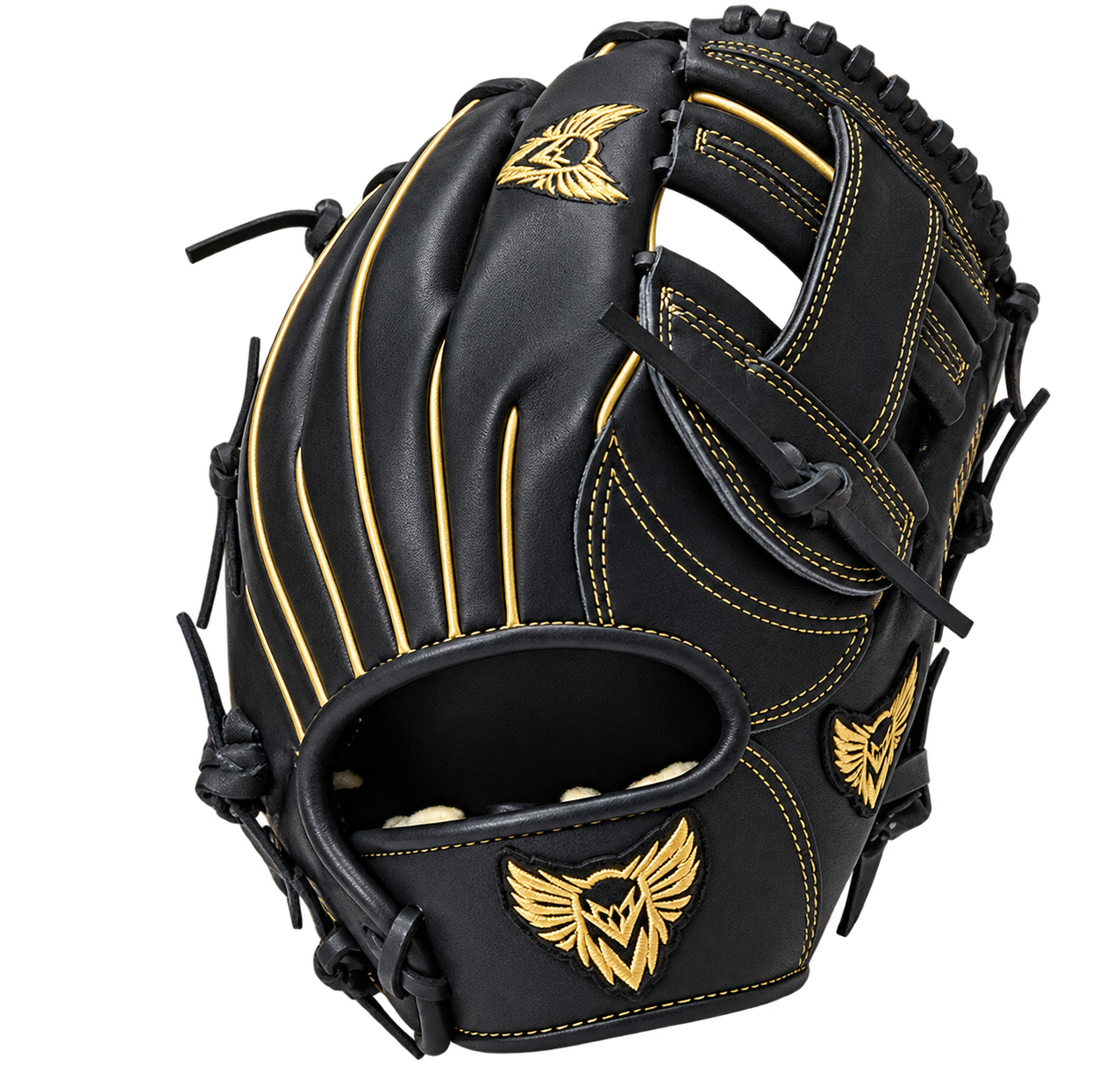
The Hawk Series Talon is listed at 11.5 inches, an infield size by the conventions above. The Hawk Series Albino Snake is listed at 11.5 and 12 inches; its record describes it as created as a collector-level statement piece within the Bass house. Both are on BassGloves.com, and a fielding glove that fits is worth an under-glove only if the hand still moves inside it, which the under-glove guide explains.
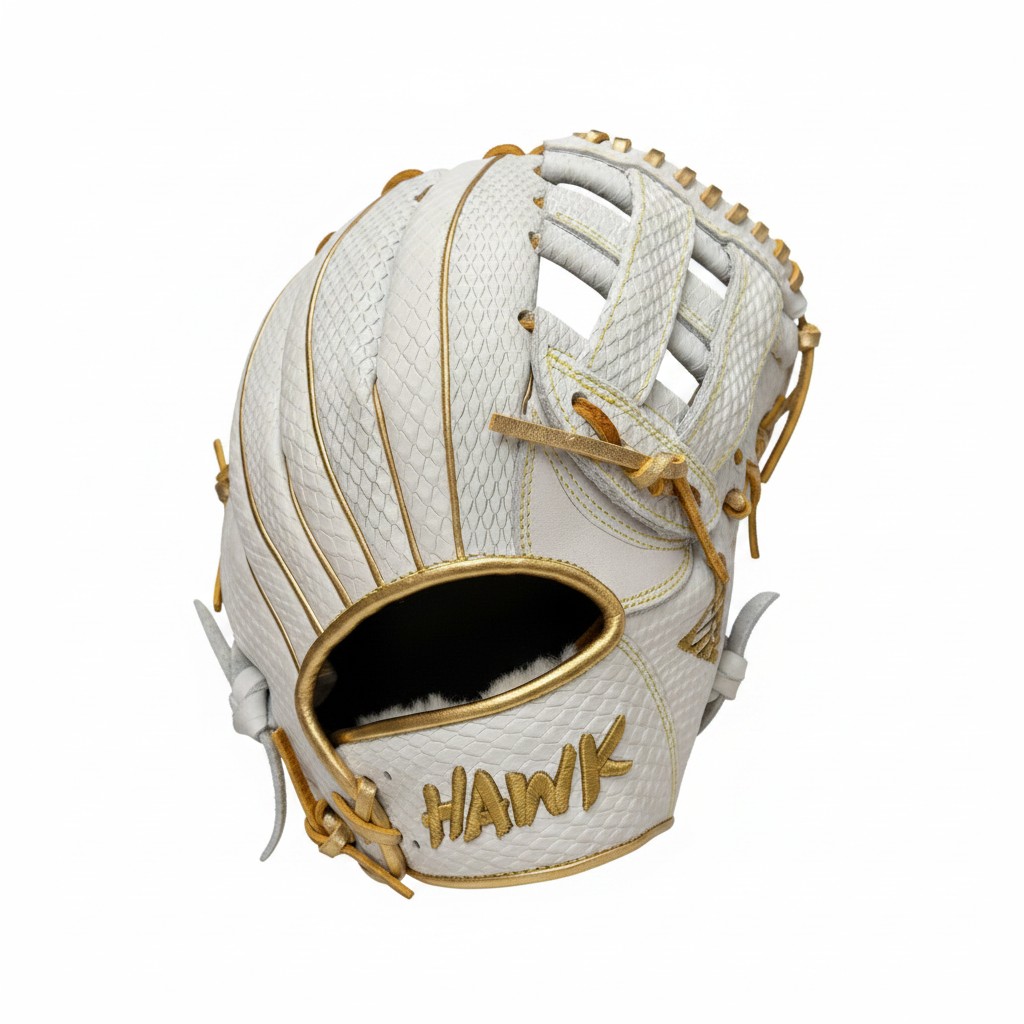
The Bass fielding gloves, with their listed sizes on each page.
Questions
- Is 11.75 too big for second base?
- Not too big to play; a little slower to close than an 11.5, which is why most second basemen stay at 11.5 or under. A second baseman who prefers a deeper pocket can play 11.75.
- Is 11.5 too small for third base?
- No. Third basemen commonly play 11.5 to 11.75. The 11.75 gives a slightly deeper pocket for hard contact; the 11.5 is quicker. Either is normal at third.
- Can you feel a quarter inch?
- In the pocket and the close, yes, on the same pattern. In reach, barely. Differences between makers' patterns are often larger than the quarter inch itself.
- Which size does a shortstop use?
- Commonly 11.5 to 11.75. Quick-transfer shortstops lean to 11.5; those who want a touch more pocket go 11.75.