
How a fielding glove is measured
The size printed on a glove is its length along the palm side, from the bottom edge of the heel to the tip of the index finger, following the curve. An 11.5 inch glove is 11.5 inches along that line. The number says nothing about how deep the pocket is, how wide the hand opening is or how stiff the leather is, which is why two gloves of the same size can fit and play differently.
First base mitts and catcher's mitts are the exceptions. A first base mitt is also given in inches but is a different shape, without separate finger stalls. A catcher's mitt is usually sized by circumference, in the low thirties of inches, rather than by length.
Size by position
Smaller gloves are quicker: less leather to close, a shallower pocket to find the ball in, a faster hand to the throw. Larger gloves give reach and a deeper pocket. The ranges below are the ones most adult baseball players work within; they are a starting point, not a rule.
- Second base, shortstop
- 11 to 11.75 inches, shallow pocket, quick close
- Third base
- 11.5 to 12 inches, a little more depth for harder contact
- Pitcher
- 11.75 to 12.25 inches, often a closed web to hide the grip
- Outfield
- 12 to 12.75 inches, deeper pocket, longer reach
- First base
- 12 to 13 inch mitt
- Fastpitch softball
- Generally half an inch to an inch larger at each position, for the bigger ball
Common ranges across the game, not Bass specifications. A player who moves between positions usually sizes for the position they play most.
Bass fielding gloves are listed in the sizes their records hold. The Hawk Series Talon is listed at 11.5 inches; the Hawk Series Albino Snake at 11.5 and 12 inches. Both are infield and pitcher sizes by the ranges above.
Youth and adult fit
A youth glove is not only shorter. It has a smaller hand opening, tighter finger stalls, a shallower pocket and softer leather, so a young hand can actually close it. A child in an adult glove of the "right" length will catch with the glove rather than the hand, because the glove will not close around the ball, and a glove that only closes when the arm swings shut is a glove that drops balls.
- Roughly ages 7 to 9: 9 to 10.5 inches.
- Roughly ages 9 to 12: 10.5 to 11.5 inches, moving up as the hand grows.
- From about 12 or 13: adult sizes, chosen by position as above, once the hand fills an adult opening.
The test is the same at any age: put the glove on, and see whether the fingers reach the stalls and the hand can squeeze it shut without the wrist doing the work.
Throwing hand and glove hand
Gloves are listed by the hand that throws, not the hand that wears them. "RHT" (right hand throw) is worn on the left hand; "LHT" (left hand throw) is worn on the right. A right-handed thrower buys an RHT glove. The same convention runs through under-gloves: a right-handed thrower wears one on the left hand.
What a secure fit feels like
- The hand goes all the way in, and the heel of the hand sits against the heel of the glove.
- Each finger reaches its stall. Some players leave the index finger outside the glove; that is a preference, not a fit problem.
- The wrist strap, lace or opening holds the glove to the hand so that turning the wrist turns the glove with it.
- The glove closes when the hand closes. Nothing else should have to move.
Firm is not painful. A glove that pinches across the back of the hand or stops the fingers reaching their stalls is too small, and no amount of break-in fixes an opening that is the wrong width.
Why a loose glove costs control
When a glove is loose, the hand moves inside it on contact. The pocket is not where the fielder put it, the ball finds the heel, and the glove has to be found again before the throwing hand can get to the ball. On a routine play that is a slower transfer; on a hard one it is a ball on the ground.
If a glove that fits everywhere else moves on the hand, the fixes are, in order: tighten the wrist closure or lacing, wear a thin under-glove to take up the slip and the sweat, or size down. See the under-glove guide for what an under-glove does and does not change.
Wearing an under-glove
An under-glove is a thin glove worn on the glove hand, beneath the fielding glove. The Bass Second Skin is recorded as ultra-thin and form-fitting, with a hexagonal grip pattern across the palm and fingers to stop the hand slipping inside the glove, a moisture-wicking fabric and a low-profile elastic wristband. It is sold for the left or the right hand, in adult M, L and XL, and is made to be worn beneath a fielding glove. Because it is thin, it does not change the size of glove a player should buy.
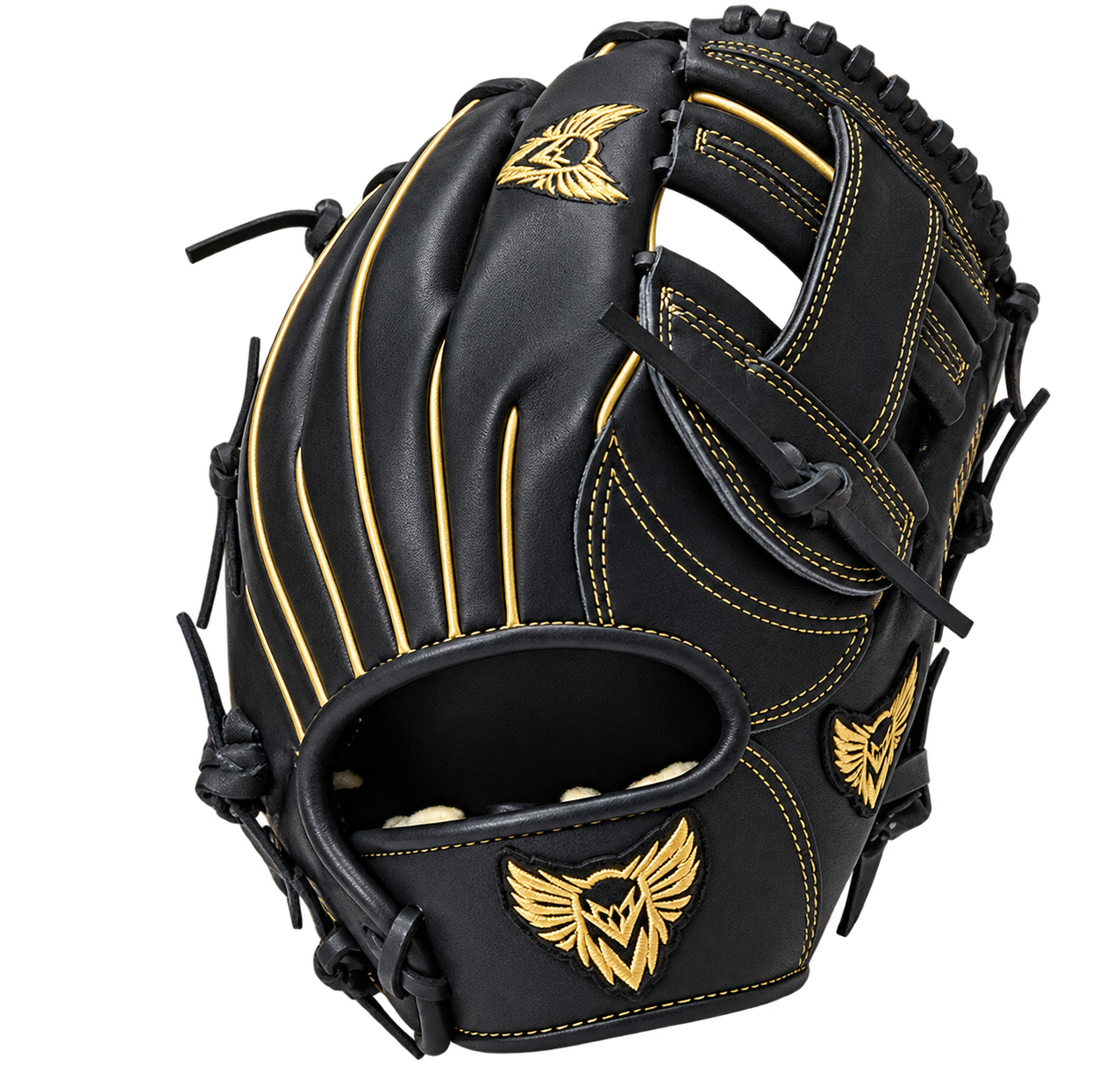
Hawk Series: Talon
View Piece →
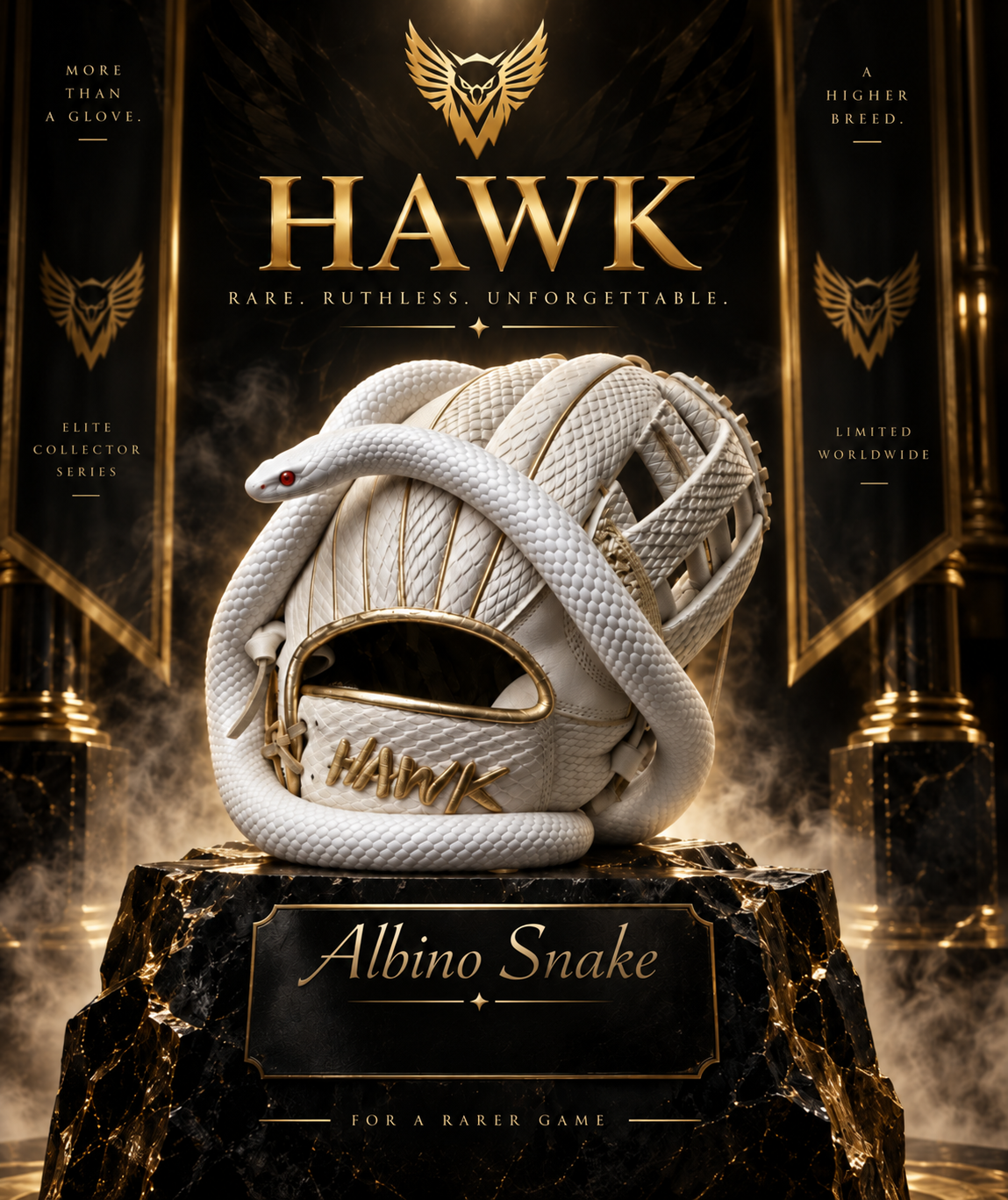
Hawk Series Albino Snake Fielding Glove
View Piece →
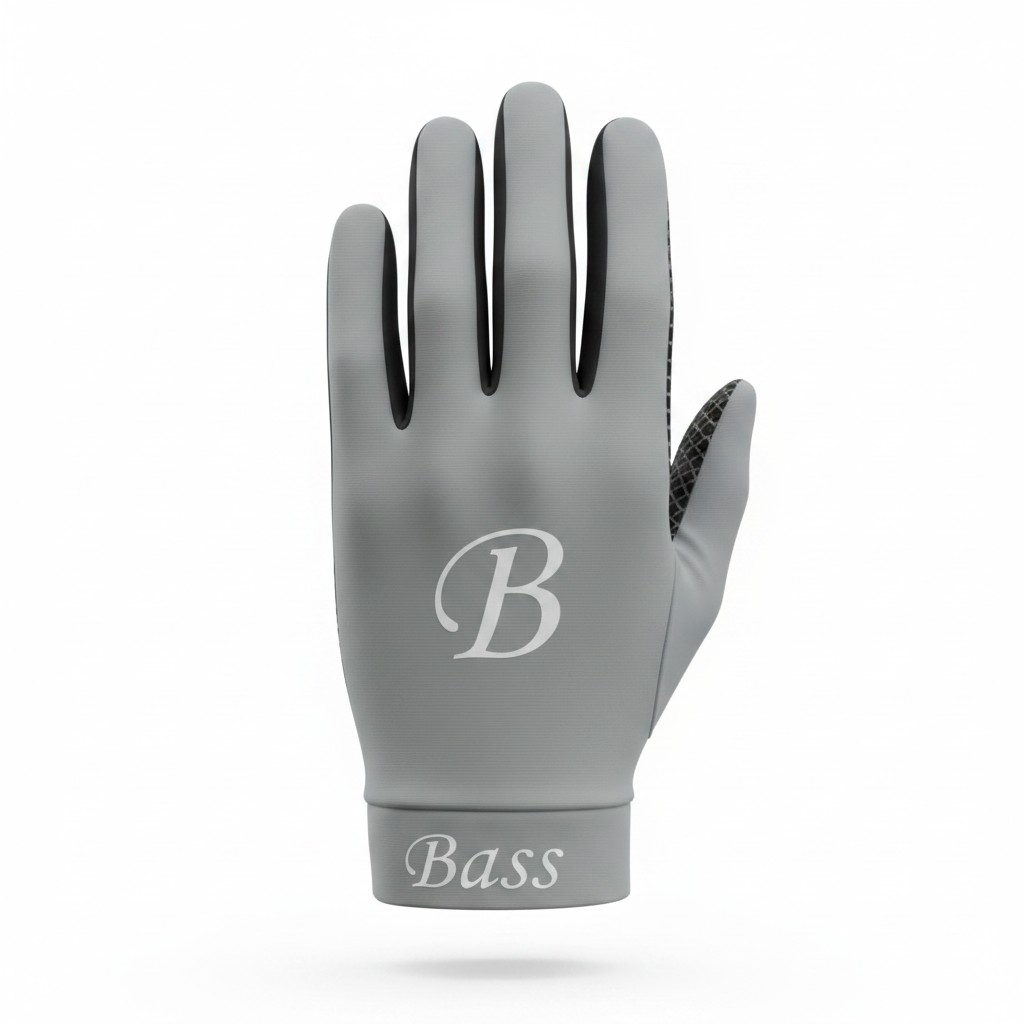
Bass Second Skin Under Gloves
View Piece →
The Bass fielding gloves and the under-glove, as recorded.
Questions
- What size fielding glove should a 10-year-old use?
- Most players that age fit a 10.5 to 11.5 inch youth glove, chosen by the hand rather than the birthday: the fingers should reach the stalls and the hand should be able to close the glove without the wrist doing the work.
- Can an infielder play a 12 inch glove?
- Yes. It trades a little quickness on the transfer for more reach and a deeper pocket. Middle infielders usually stay under 12 inches; third basemen and utility players often go to 12.
- Should a new glove feel tight?
- Firm, not tight. The hand should seat fully with the fingers in their stalls and the wrist held. A glove that pinches across the back of the hand is the wrong width and will not break in to fit.
- Which hand does an RHT glove go on?
- The left hand. RHT means right hand throw, so the glove is worn on the other hand. LHT gloves are worn on the right hand.